Showing posts with label Motion to Suppress. Show all posts

Wednesday, January 25, 2017

WILL ACCEPTANCE OF RESPONSIBILITY BE DENIED AT SENTENCING AFTER FILING A MOTION TO SUPPRESS

The community of defense lawyers who have extensive federal criminal law experience in Florida is not large. The united band of attorneys often face long odds against the mighty power of the Federal government's criminal justice system and gain strength by working together and sharing important information concerning how federal judges and prosecutors handle various issues. One issue that's often discussed among defense lawyers is the minutiae of how each federal judge currently handles unusual sentencing issues. This is true because the vast majority of federal defendants are forced into pleading guilty, many refusing to have federal jury trials believing the game is rigged to convict in the federal system.

Because over 96% of federal defendants are forced to plead guilty what should a federal defendant do when confronted with issues that should be litigated? For example, what if there's been an unlawful search by FBI or DEA agents the fruits of which are being unlawfully used by federal prosecutors to pursue a guilty plea? If the Defense counsel files a Motion to Suppress because the defendant did the smart thing by following this Blog's advice in not giving consent to search his home or car, will the Federal District Judge later retaliate at sentencing by giving the defendant a lengthier time in Federal prison?

Here is a recently received email exchange from a federal criminal defense lawyer in the Miami Division of the Southern District of Florida with other lawyers in the Middle District and the Northern District of Florida about whether local federal judges are apt to deny a three level reduction for acceptance of responsibility where a motion to suppress has been litigated:

Has anyone gotten a downward adjustment at sentencing for acceptance of responsibility when the defendant filed and litigated a motion to suppress that was denied and then entered a guilty plea?  
I know it's a long shot! 
From Orlando part of the Middle District of Florida a federal criminal defense lawyer responds as follows:
In the Orlando Division, we almost always get acceptance of responsibility under such a scenario.  If we want to preserve the suppression issue for appeal, the government usually will not agree to a conditional plea.  
They usually will agree to a bench trial with stipulated facts to preserve the suppression issue.  Even in those cases, we usually will get all three points for acceptance.  
From the Jacksonville Division in the Northern District of Florida a federal criminal defense lawyer responds as follows:
Not always - depends.  
Depends on the AUSA (Assistant United States Attorney), the PO (Probation Officer), how good your mtn to suppress was, how the judge feels ...


And from the Tampa Division, in the Middle District of Florida an attorney also responds as follows:

Same here in Tampa. They always start out "threatening" to not move for the 3rd level but only follow through with that when they feel the motion was "frivolous" - some Judges here will vary the extra level to make up the difference.

As you can see the how Florida federal criminal cases proceed thru the federal criminal justice system varies depending on which District and Division from which your case is being handled. In the Middle District of Florida it's not unusual to have federal prosecutors threaten that one or more levels may be denied at sentencing in an effort to shore up even the weakest federal criminal case.


Wednesday, August 31, 2016

FEDERAL PROSECUTORS TAKE BEATING AT SENTENCING FOR BREACH OF PROMISES MADE IN PLEA AGREEMENT

In a recent case the 1lth Federal Court of Appeals which overseas the Middle District of Florida in Tampa took the federal government to task for failing to abide by a Plea Agreement. The court found in a rare piece of good news in this part of the country that federal prosecutors knowingly violated the agreement by not giving credit for acceptance of responsibility, see U.S. v Hunter. Apparently even our self-righteous, overly conservative federal appeals court judges can take a rare turn toward justice having sniffed the changing political winds of their failed war on drugs. 

The case began as many of these drug cases do with a questionable traffic stop, this one for improper window tint. After smelling marijuana the joyous officers found marijuana, crack cocaine, powder cocaine and heroin and charged the defendant with four federal crimes of possession with intent to distribute marijuana, heroin, cocaine and crack cocaine for which our hapless defendant was indicted. All in all a glorious day to be an officer, to be a freedom loving American maybe not so much. 

A motion to the federal judge to dismiss the case and to suppress the drugs for the obviously spurious stop or for the nosey officer's inability to actually smell the odor of marijuana of course failed. No wonder so many federal defendants plead guilty refusing to have a federal criminal trial because they believe the game of federal justice is rigged. 

Here's one case where the court finally looked at the question of the blatant breach of a plea agreement by the government. The court began by defining what constitutes a breach of a plea agreement.
 “[A] plea agreement must be construed in light of the fact that it constitutes a waiver of substantial constitutional rights requiring that the defendant be adequately warned of the consequences of the plea.” United States v. Jefferies, 908 F.2d 1520, 1523 (11th Cir. 1990) (internal quotation marks omitted). “A material promise by the government, which induces a defendant to plead guilty, binds the government to that promise.” United States v. Thomas, 487 F.3d 1358, 1360 (11th Cir. 2007) (per curiam) (citing Santobello v. New York, 404 U.S. 257, 262, 92 S. Ct. 495, 499 (1971)). Hence, the government breaches a plea agreement when it fails to perform the promises on which the plea was based...
… “Whether the government violated the agreement is judged according to the defendant’s reasonable understanding at the time he entered his plea.” United States v. Boatner, 966 F.2d 1575, 1578 (11th Cir. 1992).
  
The Court makes it clear that failing to perform as promised makes for an actionable breach. And that the promises of the government are held to the standard of the defendant's reasonable understanding of the plea agreement when he changed his plea to guilty. Federal plea agreements are notoriously one-sided, typically drafted by the government and having few benefits for defendants other than the possibility of 5K motions for substantial assistance to avoid minimum mandatory sentencing in complex drug cases and the three levels for acceptance of responsibility. Interestingly even without a finding of a breach the Florida Bar found a few years ago that federal waiver provisions in plea agreements were likely unethical. Let's face it, the entire federal justice system of forced pleas and sentencing is unjust and un-American.

Further the Court notes the following:
In exchange for Hunter’s promise to plead guilty to all four charges in his indictment, the government promised to recommend a reduction for acceptance of responsibility at sentencing. Yet, at sentencing, the government did not recommend the reduction. In fact, the government objected to and argued against Hunter receiving the reduction. Viewed objectively, “the government’s actions are inconsistent with what the defendant reasonably understood when he entered his guilty plea.”1 See Copeland, 381 F.3d at 1105...
 ...It is clear that Hunter reasonably understood the government would recommend the acceptance-of-responsibility reduction on his behalf at sentencing. The promise to recommend the reduction was a key material concession made by the government in the plea agreement.
 The court notes that although the government argues that the defendant gave false testimony at the suppression hearing, the change of plea as well as the signing of plea agreement occurred after the suppression hearing; therefore both parties were bound by the plea agreement's conditions and promises and the defendant should receive the three level of credit for acceptance of responsibility. 

Tuesday, June 03, 2014

FLORIDA COP WHO LIED ABOUT SMELLING POT TO SEARCH VEHICLE SHOULD BE PROSECUTED & PUNISHED


Gloating officer with a bag of marijuana looks like he might enjoy using the smell of pot to gain entry to a home or vehicle with a search warrant in Tampa Bay, Florida.

Pinellas Circuit Judge Andrews recently found that a nosey police officer's testimony was too incredible to be believed when the officer said he could smell marijuana in a vehicle he wanted to search for drugs. As often happens in Florida although the vehicle did have cocaine when searched without a warrant no marijuana was found. Officers in Florida are taught to use the smell of marijuana as a pretext to search vehicles without taking the time, paperwork or probable cause for a proper search warrant.


In his written opinion the judge noted that "... it stretches the limits of credulity for this court to believe that the search of the defendant's vehicle was based upon the odor of marijuana." What then, one wonders, was the search based on and why did officers choose that particular vehicle to stop?

Of the many St. Petersburg Police officers at the scene of the pulled over SUV only one testified that he could smell marijuana albeit mixed with vanilla air freshener to justify the search. Clearly when other officers could not readily obtain a search warrant, this officer decided that breaking the law justified an unlawful search. And let's not mince words - the officer did break the law. First, the police officer committed at least a trespass and possibly an armed burglary of the vehicle since he had neither a search warrant nor permission to enter the vehicle. Second, the officer while testifying that he smelled marijuana may have committed the crime of perjury if he knowingly lied under oath during the Motion to Suppress evidence.

This manufacturing of evidence has been a recurring problem with Tampa Bay police officers. The only way for it to end is not only for heroic judges to throw out cases based on lies, but for the police departments to punish those who do it. 

I had a case in the Middle District Court in Tampa in which the initial stop was based on the very strong smell of marijuana. Yet when the trunk was opened without a search warrant there was no marijuana at all only a large quantity of methamphetamine. Despite suggestions from the government agents that marijuana must recently have been in the drunk, but offloaded just before the stop, the more reasonable likelihood is that the agents simply were not being honest.

Each defense lawyer in Pinellas County, Florida should be on the look out for any cases involving this officer. All of his pending cases should be reexamined by the state attorney's office to determine if the factual basis for criminal charges is corrupt. Further, every plea and every conviction involving his work should be investigated. If it is found after an investigation that the officer knowingly lied to the Judge or entered the vehicle inappropriately then St. Petersburg Police Department should not only fire the officer, but arrest him for perjury, trespass or armed burglary. 

Monday, October 07, 2013

THE FIVE BEST EFFECTIVE WAYS TO HAVE CRIMINAL CHARGES DISMISSED OR REDUCED IN FLORIDA

Criminal lawyers are often asked a simple question that has a complex answer: what are the best ways to have a criminal case dismissed? 

Here are the best five ways to achieve a dismissal of criminal charges in Florida:

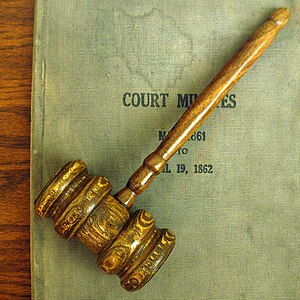
The Judge's Gavel for dismissal of criminal charges in Florida criminal defense cases in Tampa Bay.

1. Persuading prosecutors not to file charges.
2. Persuading the Judge that the charges are insufficient legally.
3  Persuading the Judge that essential evidence should be suppressed.
4. Completing the Pretrial Intervention Program or successfully completing specific crime programs such as those run for Drug Intervention or Domestic Violence.
5. Persuading a Jury in trial that the Defendant is Not Guilty.

In Tampa Bay, Florida effective defense lawyers will first do everything possible to persuade prosecutors not to file a criminal case even when there's been an arrest. Since prosecutors will later have to either try the case or persuade the Defendant to plead guilty, it's vitally important for the defense to initiate an effective early initial conversation with prosecutors and their supervisors to secure a decision not to file the case by establishing problems with evidence, witnesses or legal reasoning.

Second, a Motion to Dismiss the case should be granted by the Judge in a case where it can be established that the undisputed facts do not constitute a crime. If the prosecutor believes that the facts support the filed charge, a traverse can be filed which will block the Motion to Dismiss. The Judge may set a hearing to determine what the essential facts actual are to ascertain whether the facts should lead to the case being dismissed. It's also possible for cases to be dismissed for other procedural reasons such as far too much time between the time of indictment and arrest.

Third, a Motion to Suppress evidence may be filed to literally throw out or suppress unlawfully obtained or seized evidence which may result in the dismissal of the charges if the prosecution finds it can no longer successfully move forward with the case. For example, if a search was conducted without permission and without probable cause the Judge may suppress evidence. Though Motions to Suppress are rarely granted, it is often devastating to the prosecution when they are. Further, the mere filing of the Motion may bring benefits by prompting further factual discovery and divergent witness testimony.

Fourth, a defendant with no criminal record charged with a nonviolent crime may under certain conditions to enter a Pretrial Intervention Program upon the completion of which the case will be dismissed. The program entails a period of something similar to probation for six months to a year depending on whether the charge was a misdemeanor or felony. Although in Florida this program is under the supervision of the States Attorney's Office, the prosecutors will ask the presiding Judge to dismiss criminal charges against those who successfully complete the program. There are also similar special programs for select crimes such as drug crimes or domestic battery charges as well.

Finally, to end a criminal case with success when all other options are unavailable, a Clearwater criminal defense attorney must be capable of establishing to a jury that no crime was committed by being willing to go to trial.

Tuesday, February 12, 2013

CAN NOSEY OFFICERS SMELLING MARIJUANA SEARCH YOUR HOME WITHOUT OBTAINING A SEARCH WARRANT

Your favorite Clearwater Criminal Defense Lawyer is often asked about the grim consequences of a nosey law enforcement officer who claims he smells marijuana as he stands at the door of your home. Can the officer conduct a search of your home without first obtaining a search warrant? And if drugs are found should the Court grant a Motion to Suppress?

Van Gogh's self portrait with pipe establishes that had he lived in Tampa Bay, Florida a search warrant would have been required to take his marijuana at his home and charge him with the crime of possession.
 Van Gogh, Pot Pipe, 1887
First, it's important to note that at least one recent case, Kentucky v. King, from the United States Supreme Court makes a mockery of the fourth amendment protection of requiring a Search Warrant with an affidavit based on probable cause that describes with precision the place to be searched as well as what is expected to be found at that place and why it's expected to be found there. 
In the case smell of marijuana combined with an officer's belief based on noises heard at the home that evidence was likely being destroyed was enough to trigger the exigent circumstances exception.

Justice Ginsburg's dissent noted:

“How ‘secure’ do our homes remain if police, armed with no warrant, can pound on doors at will and …forcibly enter?” Because the amendment’s “core requirement” is clear - officers must have probable cause with a search warrant before they break into a home.

Officers have been shown to haven many incentives to lie just to make an arrest. Unfortunately the Pinellas County Sheriff's Department in Tampa Bay, Florida has recently been found to have lied even when trying to obtain information for search warrants and lied to gain entry into homes, so it's even that much easier just to lie about smelling marijuana and hearing noises consistent with destruction of evidence to enter a home.
A recent Florida Case in the 2nd DCA, State vs. Roman, overturned a trial court which granted a Motion to Suppress evidence, but in that case that case there was much more evidence consistent with marijuana than just smell. 
A pending case, Florida vs, Jardines, now before the U.S. Supreme Court was appealed from a Florida Supreme Court case dealing with a drug dog alert based on a whiff of marijuana. The Florida Supreme Court in that case found that Officer's acting on the marijuana smell was a substantial government intrusion of the sanctity of a Florida home.
Clearly, no law enforcement agency should be able to search a home based only on the smell of marijuana. 
So what do police do? They gather more evidence. Here's an excerpt from an interesting source, Police Chief Magazine, advising Florida officers to focus on training and experience in drug detection in an article titled The Nose Knows:
The ability of an officer to explain and justify the accuracy of his perceptions is important when he or she relies on those perceptions to formulate probable cause. For instance, a Florida court held that a police officer had probable cause to search a vehicle after smelling burnt marijuana, in part because he had 20 years of experience and had smelled marijuana hundreds of times.
One wonders if that officer's experience and training was advanced  by the smelling marijuana in his own home? And in many of these cases there is no burned marijuana smell at all. What about an officer's actual ability to smell unburned marijuana as in many of the marijuana grow house cases?