It's believed that children exposed to high levels of violence are much more likely later in life to commit crime. Therefore it stands to reason that proof of exposure to violence as a child should be grounds for mitigation of criminal sentences. This is clearly true for a proper defense for any juvenile defendants who have been subjected to violence, sexual battery, sexual harassment, electronic harassment, bullying or any other act of inappropriate violence. But Defense lawyers should also use this information to the advantage of their adult clients to secure the best possible outcome in all Florida criminal courts (federal and state). So in evaluating your case it's important for your criminal defense lawyer to not only gather information on the charges you may be facing, but to have a clear understanding of every facet of your life and upbringing.
In Florida criminal courts and in the federal court in the Middle District of Florida reference can be made to the National Institute of Justice compendium of research on children exposed to violence, which as its name implies is a study of the most reliable recent research on effects and attributes of childhood violence. Not only does this study define in a broad way what may constitute violence in many situations, but it also discusses factors of risks and resilience, social bonds of violence, contexts of violence, teen dating violence, clusters of violence, school violence, familial violence and many physical and mental consequences of exposure to violence. So much so that even just writing about all this violence gives me a foreboding feeling of what may be lurking in the hallway as the lights flicker.
Having this information at hand is important for any client who is a juvenile, but may also be significant for many adult clients who have been victimized or subjected to some type of violence as a child. Clearly the goal is to humanize your client. Good judges and fair prosecutors should be led into the story of your client so that they'll gain an actual interest not only in the facts of a particular case, but also in why the facts happened and how to make certain that any possible triggers for criminal behavior is resolved so that it never happens again. So no matter how old your client is now the compendium may be helpful in finding solid scientific support in persuading prosecutors to reduce felony charges to misdemeanors or as possible mitigation at the time of sentencing instead of merely relying on Florida sentencing guidelines and scoresheets.
Showing posts with label guidelines and scoresheets. Show all posts
Showing posts with label guidelines and scoresheets. Show all posts
Tuesday, November 08, 2016


Monday, June 27, 2016
HOW TO SURVIVE THE HARD FALL FROM AN ARREST OR AN ONGOING CRIMINAL INVESTIGATION IN FLORIDA
If you've been arrested or have a warrant for your arrest or if you're under investigation for a crime in Pinellas County, Florida you need to find the best way to parachute to safety from Florida's harsh criminal justice system. It's important to find timely help from a criminal defense attorney who will guide you thru the complicated criminal justice system so that you can land with the best possible outcome for your situation.
When someone waits to hire an attorney, it only makes it more likely that their side of the story will never be heard or be heard too late to make a significant difference in the outcome of the case. That's because in most cases the criminal justice process works in the following way:
The police initiate an investigation of a possible criminal act. Their primary goal is find the perpetrator without regard to whether there exists sufficient evidence to successfully bring that perpetrator to justice at trial with a guilty conviction. The police either make an arrest or defer arrest for further investigation.
It's important to understand that whatever decision is made by the relevant police agency, that decision will later be reviewed by prosecutors at the State Attorney's Office. Prosecutors may elect to file no charges or to file different charges or to file the same charges. But prosecutors aren't merely determining if a defendant committed the alleged criminal act, prosecutors use the higher standard of whether whatever charges may be filed can be won at trial. This makes sense in that the prosecutors are the ones who will try the case and must be reasonably certain of success to file a criminal charge.
If prosecutors elect not to pursue any charges, the case will end. Should prosecutors elect to file criminal charges then the criminal case will move forward thru the criminal court. A judge will set a day of trial before which the defendant will either plead guilty to a negotiated outcome or finally have his day in court before a jury of his peers - those unspeakable folks who occasionally ram your cart at Walmart. If convicted a defendant not only faces the frowning judge but the harsh Florida sentencing guidelines and scoresheets that determine sentences in Pinellas Courts from which even the most lenient judge has little room for judicial discretion to reduce a severe sentence.
Having immediate help and legal representation is essential to navigate the difficult and confusing criminal justice process from investigation by the police, to a possible arrest, to investigation of the facts and circumstances of the incident by the prosecutors and possible trial. At every stage your advocate will do everything possible to have the charges dismissed or reduced and to gain the best possible outcome in your case.
 |
| How to Parachute to safety from Florida's Harsh Criminal Justice System |
When someone waits to hire an attorney, it only makes it more likely that their side of the story will never be heard or be heard too late to make a significant difference in the outcome of the case. That's because in most cases the criminal justice process works in the following way:
The police initiate an investigation of a possible criminal act. Their primary goal is find the perpetrator without regard to whether there exists sufficient evidence to successfully bring that perpetrator to justice at trial with a guilty conviction. The police either make an arrest or defer arrest for further investigation.
It's important to understand that whatever decision is made by the relevant police agency, that decision will later be reviewed by prosecutors at the State Attorney's Office. Prosecutors may elect to file no charges or to file different charges or to file the same charges. But prosecutors aren't merely determining if a defendant committed the alleged criminal act, prosecutors use the higher standard of whether whatever charges may be filed can be won at trial. This makes sense in that the prosecutors are the ones who will try the case and must be reasonably certain of success to file a criminal charge.
If prosecutors elect not to pursue any charges, the case will end. Should prosecutors elect to file criminal charges then the criminal case will move forward thru the criminal court. A judge will set a day of trial before which the defendant will either plead guilty to a negotiated outcome or finally have his day in court before a jury of his peers - those unspeakable folks who occasionally ram your cart at Walmart. If convicted a defendant not only faces the frowning judge but the harsh Florida sentencing guidelines and scoresheets that determine sentences in Pinellas Courts from which even the most lenient judge has little room for judicial discretion to reduce a severe sentence.
Having immediate help and legal representation is essential to navigate the difficult and confusing criminal justice process from investigation by the police, to a possible arrest, to investigation of the facts and circumstances of the incident by the prosecutors and possible trial. At every stage your advocate will do everything possible to have the charges dismissed or reduced and to gain the best possible outcome in your case.
Monday, December 07, 2015
HOW THAT FOOL JUDGE HOLDER AIMS FOR JUSTICE BY TRUMPING THE CRIMINAL SENTENCING GUIDELINES
Judges - some are good, some are bad, some are smart and still others are just fools. Let's take a look at Circuit Judge Holder, a fool if there ever was one. For most criminal judges in Florida finding justice for criminal defendants is quick and easy, it's all about calculating the guideline ranges and like a machine spitting out the highest prison sentence possible. Smart judges know you can never give too much prison time to a defendant as it never pays in the end to show too much compassion or to look too deep into the facts and circumstances of a case. Real justice practiced by smart judges in Florida is all about being re-elected preferably without any opposition. The best way to do that is not to take any undo risks with those damned defendants who'd enjoy nothing more than spoiling their breakfast newspaper time with some new sordid crime followed in section B.
Who knew that in the west coast of Florida there could be a judge who is not a mere guidelines and scoresheets calculating machine? Apparently this fool, Judge Holder, believes that justice means weighing all the facts surrounding an incident not only from the prosecution, the police, the witnesses and the victims, but all of the circumstances of a crime including even the possible motivations and incomprehensible suffering of the very defendant who committed the crime.
In a recent case before Judge Holder in the special court for war veterans he ruled on the fate of a veteran shown to have post-traumatic stress disorder. The young veteran, a student at the University of South Florida, was charged with discharging a firearm, aggravated assault with a deadly weapon and criminal mischief. In his case, as in many so-called violent crimes, no one was actually hurt with his psychological issues combined with alcohol clearly shown to be a contributing factor.
In fact the only life seemingly ruined because of the incident was that of the young veteran who faced not only the grim prospect of years in prison after being branded a violent criminal for the rest of his life, but also of living a life with fewer job and educational opportunities as he'd been expelled from USF.
Because of the proven PTS the Judge Holder gave no jail time despite Florida sentencing guidelines dictating prison. Instead he gave two years of house arrest with a reasonable provision of his sentence being that the veteran receive regular help and therapy for his PTSD.
But merely making sure that he'd given the young veteran a fair sentence wasn't enough for this judge. He took the time to write members of the board of the University of South Florida and to speak to them in urging the university to allow the young veteran to get his degree. Of course they ignored the judge, after all he's a fool. Just because he cares about justice, compassion and second chances why should he assume anyone else does? This is Florida, after all.
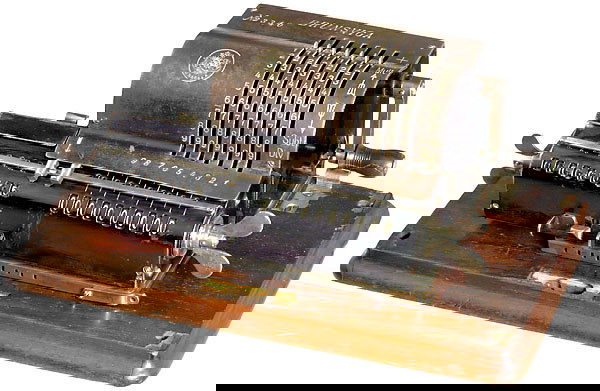 |
| Donkey Wonder Fortune Teller Calculating Machine Used By Florida Judges to Calculate Prison Terms |
Who knew that in the west coast of Florida there could be a judge who is not a mere guidelines and scoresheets calculating machine? Apparently this fool, Judge Holder, believes that justice means weighing all the facts surrounding an incident not only from the prosecution, the police, the witnesses and the victims, but all of the circumstances of a crime including even the possible motivations and incomprehensible suffering of the very defendant who committed the crime.
In a recent case before Judge Holder in the special court for war veterans he ruled on the fate of a veteran shown to have post-traumatic stress disorder. The young veteran, a student at the University of South Florida, was charged with discharging a firearm, aggravated assault with a deadly weapon and criminal mischief. In his case, as in many so-called violent crimes, no one was actually hurt with his psychological issues combined with alcohol clearly shown to be a contributing factor.
In fact the only life seemingly ruined because of the incident was that of the young veteran who faced not only the grim prospect of years in prison after being branded a violent criminal for the rest of his life, but also of living a life with fewer job and educational opportunities as he'd been expelled from USF.
Because of the proven PTS the Judge Holder gave no jail time despite Florida sentencing guidelines dictating prison. Instead he gave two years of house arrest with a reasonable provision of his sentence being that the veteran receive regular help and therapy for his PTSD.
But merely making sure that he'd given the young veteran a fair sentence wasn't enough for this judge. He took the time to write members of the board of the University of South Florida and to speak to them in urging the university to allow the young veteran to get his degree. Of course they ignored the judge, after all he's a fool. Just because he cares about justice, compassion and second chances why should he assume anyone else does? This is Florida, after all.
Monday, July 15, 2013
FINDING THE BEST WAYS TO AVOID GUIDELINE RANGES TO PROVIDE JUDGES BETTER SENTENCING OPTIONS
A recurring sentencing scenario that Clearwater criminal defense attorneys often experience is a frowning Judge who states on the record that regretfully the onerous sentencing guidelines call for a harsh sentence which must be imposed. At least the Sentencing Guidelines don't yet call for being sent to the old Village Stocks as punishment or Judges would do that as well. It's not enough that the United States Supreme Court has ruled that the Federal Sentencing Guidelines are merely advisory.
If it's a Federal Judge he'll remind the lawyers that despite what the Supreme Court has stated, the Federal Sentencing Guidelines as they pertain to lengthy minimum mandatory sentences can only be pierced by substantial assistance based on co-operation or by the rarely invoked safety valve provision which only applies in drug cases and only if the Defendant is in the first criminal history category.
Yet even when no minimum mandatory sentence is triggered under the Federal Sentencing Guidelines the Judge feels bound by them and will work from the guidelines toward a fair sentence.
In the state criminal justice system of Florida, the Judge will maintain that the Supreme Court's opinion on the Federal criminal justice system has no bearing on the state of Florida and at this point the Judge is correct. So the Judge will look to Florida scoresheets calculations that create a sentencing guideline range to determine an appropreate sentence.
Here are some of the best ways to present better sentencing options for a Judge that trump the sentencing guidelines.
First, the facts of the case need to be exploited and explained in such a way that the Court will differentiate the case from others that seem similar but aren't. This must be based on a fact based presentation and comparison of the case at hand in comparison to the typical case for which the criminal statute was clearly written. For example, intentionally spitting on an officer is a Felony Battery, but should the law apply with equal heft in punishment where the officer in question is shown to have egged the Defendant on?
Second, the Defendant must be made to seem much more sympathetic than a typical Defendant. At the heart of this is finding the lynchpin that explains to the Judge why this event happened and why it will never happen again. One purpose of sentencing may be punishment, but another purpose of sentencing is rehabilitation. How does it help society to punish a Defendant if at sentencing the defense can establish a high likelihood that the Defendant will never commit another crime?
At issue in every sentencing case should be the question: is this a fair sentence and if not, why not? Showing a wide disparity of sentences within a given law's sentencing history may establish the inherent unfairness of a sentence. This is what happened in the abolition of the 100 to 1 mandatory minimum ratio of crack cocaine punishment to powder cocaine punishment in Federal Courts. But thousands of Americans suffered years of wasted prison time before the Courts, and finally Congress, were brave enough to make the needed change based on disparity of sentence.
Finding leverage for a fair sentence thru special personal characteristics of the Defendant is specified under the Federal Guidelines as giving the sentencing Judge discretion to go under the guidelines to provide for a fair sentence. This federal framework can also be very successful in state court system.
As an example would be a case involving a million dollar fraud scheme for which a client who also happens to have an on-going, non-curable disease accepts responsibility for his criminal conduct by pleading guilty. The Sentencing Guidelines call for jail based on the amount of the taking in the scheme to defraud. Yet establishing to the Judge that the client is taking non-FDA approved drugs for his illness, forces the Judge to go under the guidelines and give no prison time whatsoever, because non-FDA approved drugs are not allowed in the Federal Prison System.
If someone you care about is concerned about how the Sentencing Guidelines will affect a Judge's sentencing decisions you need to find a Clearwater criminal lawyer who will find the best options that are available by making sure the Judge creates a sentence which gives the least amount of punishment while still protecting the community.
 |
| Sentencing Options have changed. |
Yet even when no minimum mandatory sentence is triggered under the Federal Sentencing Guidelines the Judge feels bound by them and will work from the guidelines toward a fair sentence.
In the state criminal justice system of Florida, the Judge will maintain that the Supreme Court's opinion on the Federal criminal justice system has no bearing on the state of Florida and at this point the Judge is correct. So the Judge will look to Florida scoresheets calculations that create a sentencing guideline range to determine an appropreate sentence.
Here are some of the best ways to present better sentencing options for a Judge that trump the sentencing guidelines.
First, the facts of the case need to be exploited and explained in such a way that the Court will differentiate the case from others that seem similar but aren't. This must be based on a fact based presentation and comparison of the case at hand in comparison to the typical case for which the criminal statute was clearly written. For example, intentionally spitting on an officer is a Felony Battery, but should the law apply with equal heft in punishment where the officer in question is shown to have egged the Defendant on?
Second, the Defendant must be made to seem much more sympathetic than a typical Defendant. At the heart of this is finding the lynchpin that explains to the Judge why this event happened and why it will never happen again. One purpose of sentencing may be punishment, but another purpose of sentencing is rehabilitation. How does it help society to punish a Defendant if at sentencing the defense can establish a high likelihood that the Defendant will never commit another crime?
At issue in every sentencing case should be the question: is this a fair sentence and if not, why not? Showing a wide disparity of sentences within a given law's sentencing history may establish the inherent unfairness of a sentence. This is what happened in the abolition of the 100 to 1 mandatory minimum ratio of crack cocaine punishment to powder cocaine punishment in Federal Courts. But thousands of Americans suffered years of wasted prison time before the Courts, and finally Congress, were brave enough to make the needed change based on disparity of sentence.
Finding leverage for a fair sentence thru special personal characteristics of the Defendant is specified under the Federal Guidelines as giving the sentencing Judge discretion to go under the guidelines to provide for a fair sentence. This federal framework can also be very successful in state court system.
As an example would be a case involving a million dollar fraud scheme for which a client who also happens to have an on-going, non-curable disease accepts responsibility for his criminal conduct by pleading guilty. The Sentencing Guidelines call for jail based on the amount of the taking in the scheme to defraud. Yet establishing to the Judge that the client is taking non-FDA approved drugs for his illness, forces the Judge to go under the guidelines and give no prison time whatsoever, because non-FDA approved drugs are not allowed in the Federal Prison System.
If someone you care about is concerned about how the Sentencing Guidelines will affect a Judge's sentencing decisions you need to find a Clearwater criminal lawyer who will find the best options that are available by making sure the Judge creates a sentence which gives the least amount of punishment while still protecting the community.
Subscribe to:
Posts (Atom)