Wednesday, February 20, 2013

WITHHOLDING OF ADJUDICATION SENTENCE MEANS YOU WERE NEVER FOUND GUILTY UNDER FLORIDA LAW


What does it mean when a Judge withholds adjudication in a criminal case in Florida?
Your favorite Clearwater Criminal Defense Attorney recently asked to provide a letter for a man who told me that he often has difficulty establishing that he's never been convicted of a crime even though under Florida law he was never found guilty in court.

Here's what he asked me:
A few years ago I was given a disposition of Adjudication Withheld on a felony criminal case in Tampa Bay, Florida. 
Van gogh's portrait of Alexander Reid shows the type of somber man in need of a withholding of adjudication from a Tampa Bay, Florida Judge.
Van Gogh,  Adjudication
Since then I've been confronted by prospective employers and even prospective landlords with the public information about my case. 
Despite the fact that the information they find on the case clearly indicates that I received an Adjudication Withheld, they seem to believe that I was guilty of a felony. 
Could you send me a letter that I can use to establish that I was never convicted of a felony?
How could I say no? This kind of problem often could be avoided if after a case is resolved immediate action is taken to seal or expunge the case. For those cases that can't be sealed or expunged here's a portion of the letter which I provided for him that could serve the purposes of anyone in his situation:

Under Florida Statutes Section 948.01(2) an Adjudication Withheld is not a conviction. Florida Judges are vested with authority to grant a Withholding of Adjudication whenever the facts and circumstances of a case establish that there should be no finding of guilt in the case. 

When a Florida Judge sentences someone with Adjudication Withheld it literally means the Court does not make a finding of guilt, because the law enables the Judge to "stay or withhold the adjudication of guilt."

Since there was no finding of guilt, anyone treating the case as though there were a finding of guilt may find themselves subject to civil liability under Florida law.

If that isn't enough, have them give your favorite Clearwater criminal lawyer a call and I'll explain it to them or drag them kicking and screaming to this web page.

Monday, February 18, 2013

WHY MUST OFFICERS INVESTIGATING DOMESTIC VIOLENCE IN FLORIDA ALWAYS MAKE AN ARREST

Your favorite Clearwater criminal defense lawyer was recently asked this question about domestic violence:
I was arrested for a Battery against my girlfriend in Tampa Bay, Florida. We were both fighting not just me. We have a child together. We were going to get married, but put it off until this is behind us. She has signed a Request Not to Prosecute. I'm wondering if the State of Florida decides not to prosecute me can they still bring the charges back up in the future if she changes her mind and wants me prosecuted? How long do I have to wait to be certain that charges won't be filed? If charges are filed against me what will happen?
Abbasi's Painting of Two Lovers so tranquil and languid before the domestic violence of a battery or assault which in Tampa Bay, Florida could be resolved without either lover going to jail.
Reza Abbasi, Two Lovers, 1630
The first consideration for law enforcement is the safety of your girlfriend as well as the child. Under Florida law whenever domestic violence is alleged, officers by law must make an arrest of someone in the home if any evidence of a battery or assault is found. Why was this enacted?
Because more officers are killed while investigating domestic violence than in any other type of investigation they undertake. 
Think about that, more than in burglaries, robberies and grand thefts. When officers are called to any domestic violence situation they are well aware of the risks as well as the fact that domestic violence affects a large portion of the American population.
Recent domestic violence statistics establish that the problem is pervasive with nearly 25% of women and 7% of men being the victim of an assault or battery by a spouse, co-habitating partner or date. 
When any crime is committed in Florida, the State of Florida views itself as being an interested party. In practice this means that even when a victim does not want to prosecute a case, the State of Florida can proceed with prosecution. Other than the statute of limitations there is no legal limit to how long prosecutors can take to make a filing decision.
If charges are filed against you and if you don't have any prior criminal record, then you may be able to apply for a diversionary program such as Pretrial Intervention where the charges will eventually be dismissed. Tampa Bay recently established a new Domestic Violence Court in Pinellas where the focus will include counseling with Batterer Intervention Programs rather than simply giving jail.

Tuesday, February 12, 2013

CAN NOSEY OFFICERS SMELLING MARIJUANA SEARCH YOUR HOME WITHOUT OBTAINING A SEARCH WARRANT

Your favorite Clearwater Criminal Defense Lawyer is often asked about the grim consequences of a nosey law enforcement officer who claims he smells marijuana as he stands at the door of your home. Can the officer conduct a search of your home without first obtaining a search warrant? And if drugs are found should the Court grant a Motion to Suppress?

Van Gogh's self portrait with pipe establishes that had he lived in Tampa Bay, Florida a search warrant would have been required to take his marijuana at his home and charge him with the crime of possession.
 Van Gogh, Pot Pipe, 1887
First, it's important to note that at least one recent case, Kentucky v. King, from the United States Supreme Court makes a mockery of the fourth amendment protection of requiring a Search Warrant with an affidavit based on probable cause that describes with precision the place to be searched as well as what is expected to be found at that place and why it's expected to be found there. 
In the case smell of marijuana combined with an officer's belief based on noises heard at the home that evidence was likely being destroyed was enough to trigger the exigent circumstances exception.

Justice Ginsburg's dissent noted:

“How ‘secure’ do our homes remain if police, armed with no warrant, can pound on doors at will and …forcibly enter?” Because the amendment’s “core requirement” is clear - officers must have probable cause with a search warrant before they break into a home.

Officers have been shown to haven many incentives to lie just to make an arrest. Unfortunately the Pinellas County Sheriff's Department in Tampa Bay, Florida has recently been found to have lied even when trying to obtain information for search warrants and lied to gain entry into homes, so it's even that much easier just to lie about smelling marijuana and hearing noises consistent with destruction of evidence to enter a home.
A recent Florida Case in the 2nd DCA, State vs. Roman, overturned a trial court which granted a Motion to Suppress evidence, but in that case that case there was much more evidence consistent with marijuana than just smell. 
A pending case, Florida vs, Jardines, now before the U.S. Supreme Court was appealed from a Florida Supreme Court case dealing with a drug dog alert based on a whiff of marijuana. The Florida Supreme Court in that case found that Officer's acting on the marijuana smell was a substantial government intrusion of the sanctity of a Florida home.
Clearly, no law enforcement agency should be able to search a home based only on the smell of marijuana. 
So what do police do? They gather more evidence. Here's an excerpt from an interesting source, Police Chief Magazine, advising Florida officers to focus on training and experience in drug detection in an article titled The Nose Knows:
The ability of an officer to explain and justify the accuracy of his perceptions is important when he or she relies on those perceptions to formulate probable cause. For instance, a Florida court held that a police officer had probable cause to search a vehicle after smelling burnt marijuana, in part because he had 20 years of experience and had smelled marijuana hundreds of times.
One wonders if that officer's experience and training was advanced  by the smelling marijuana in his own home? And in many of these cases there is no burned marijuana smell at all. What about an officer's actual ability to smell unburned marijuana as in many of the marijuana grow house cases?

Saturday, February 09, 2013

SENTENCING MUST ACCOUNT FOR STARTLING SCIENCE: ADDICTION IS BASED ON SHAPE OF DRUG USER'S BRAIN

A new drug study out of The University of Cambridge in England has some startling conclusions which should directly affect drug sentencing. Scientist found that recreational drug users who do not become addicted have "a brain structure which is significantly different than those who developed cocaine dependence." 


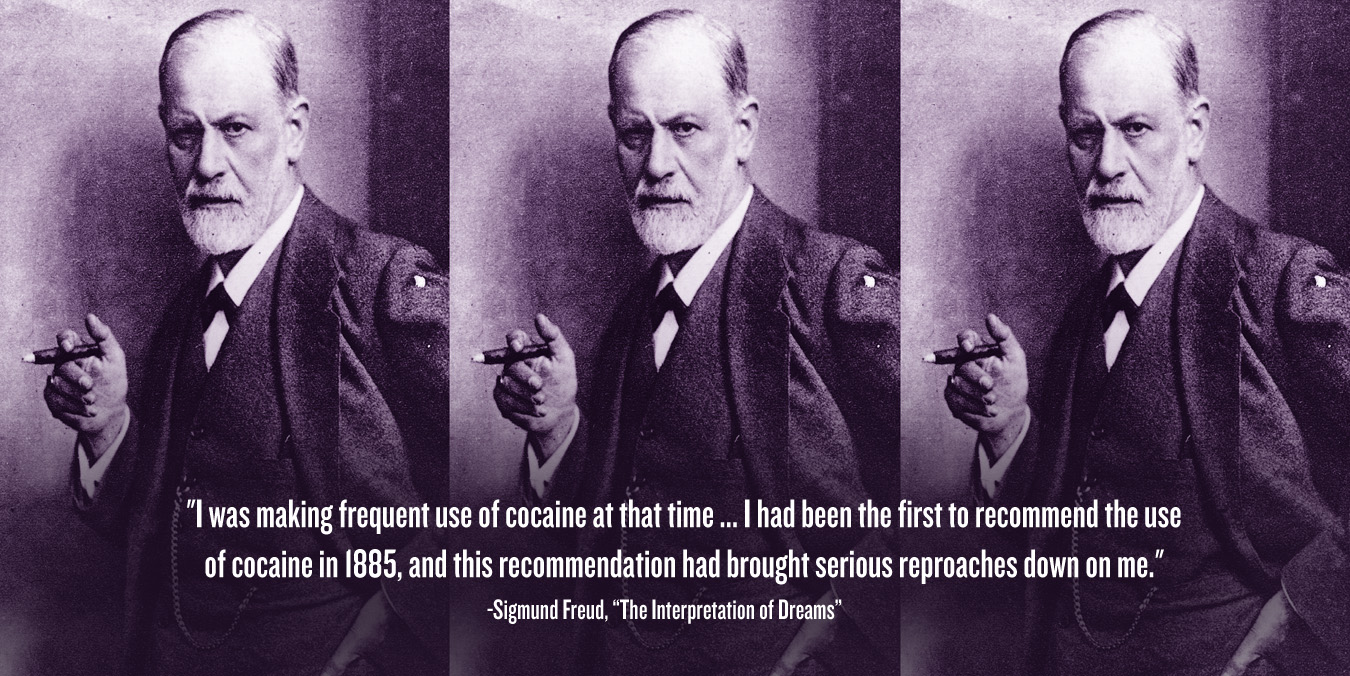
Sigmund Freud was addicted to cocaine for over twelve years. Would he have been prosecuted for trafficking in cocaine had he lived in Tampa Bay, Florida today? The implication is that those who become addicted to drugs are suffering as much from a flaw in their brains than from a simple lack of will power or from a desire to break the law.

The research was published, Biological Psychiatry; here's an excerpt from their findings:

The scientists discovered that a region in the frontal lobes of the brain, known to be critically implicated in decision-making and self-control, was abnormally bigger in the recreational cocaine users. 
The Cambridge researchers suggest that this abnormal increase in grey matter volume, which they believe predates drug use, might reflect resilience to the effects of cocaine, and even possibly helps these recreational cocaine users to exert self-control and to make advantageous decisions which minimize the risk of them becoming addicted. 
They found that this same region in the frontal lobes of the brain was significantly reduced in size in people with cocaine dependence...They also found that people who use illicit drugs like cocaine exhibit high levels of sensation-seeking personality traits, but only those developing dependence show personality traits of impulsivity and compulsivity.


One of the lynchpins of criminal law is that punishment must be based on acts which were done with the free will of the Defendant. Once someone becomes addicted the focus of the Criminal Justice System should not be on punishment with hard drug laws but on prevention. Yet for a percentage of the population taking drugs becomes an uncontrollable impulse. 
One wonders what would happen to an habitual cocaine addict such as Sigmund Freud who was addicted to cocaine for over twelve years. Had he live here in Tampa Bay, Florida would he have simply been charged with Trafficking in Cocaine while facing years of prison with a minimum mandatory sentence? 
An excellent book, Anatomy of an Addiction tells the harrowing tale of how Sigmund Freud beat his addiction while his best friend a renowned surgeon was ruined from his addiction to cocaine, while both experimented with the drug. 
Now with this new Cambridge scientific study we know that it wasn't mere will power that determined who would beat the addiction, it was biology. Other recent studies have show that genetic triggers prove predisposition to commit crime.
Shouldn't the Criminal Justice System take biological traits leading to addiction into account as sentencing to ensure fairness in Drug Court? Clearwater Criminal Defense Attorneys must persuade Judges that dependence on drugs is not just a lack of will power it's often simply a fact of biology.

Monday, February 04, 2013

WHAT INCENTIVES DO LAW ENFORCEMENT OFFICERS HAVE TO COMMIT PERJURY IN CRIMINAL CASES

Your favorite Clearwater Criminal Lawyer has watched with bated breath in numerous criminal trials as hundreds of officers have lined up one by one to testify against my doomed clients. Upon taking the witness stand having sworn to tell the truth they've done everything possible to convince those once fair and impartial jurors to convict. Were those officers always telling the truth?

Manet painting of wight. The man in the painting looks like a law enforcement officer who has just committed perjury in Tampa Bay criminal courtroom B under cross-examination
Manet, Considering Perjury, 1875
It's not uncommon to know that an officer is committing perjury especially when other evidence directly establishes that the officer is simply lying. 
Should the Jury, well and truly try and true, believe that libelous video that seems to show the officer beating all hell out of my client or the trustworthy officer's testimony? And yet the prosecutor will always ask the jury this, "Why would a law enforcement officer ever risk his career to lie under oath about a criminal case?" 
A recent editorial by Michelle Alexander in the New York Times addresses the issue of why officers lie under oath giving some good reasons as to why it happens more often than we think. The article quotes the San Francisco Police Commissioner as follow:
“Police officer perjury in court to justify illegal dope searches is commonplace. One of the dirty little not-so-secret secrets of the criminal justice system is undercover narcotics officers intentionally lying under oath. It is a perversion of the American justice system that strikes directly at the rule of law. Yet it is the routine way of doing business in courtrooms everywhere in America.”
The article mentions the unrelenting pressure to make ever greater numbers of arrests as a significant cause of police perjury. In many police departments the quality of an officer's work is judged based on the number of arrests he makes. 
Here in Tampa Bay the Largo Police Department and the Florida Highway Patrol have the reputation of going to extraordinary lengths to persuade their officers that the only path to advancement is with high arrest numbers causing some officers to speak up about the unrealistic pressure of the quota systems, even as the police agencies deny there is a quota system.
A second cause could be called the War on Drugs Syndrome. This seems to be what has long afflicted the Pinellas County Sheriff's Office in Tampa Bay, Florida who broke the law during investigations of significant drug cases, such as manufacturing marijuana.
The internal thinking of officers must be something along the lines of, "It's a war after all. It's us versus them. They're violating the law. We're the good guys." And the next thing you know Deputies are acting like criminals themselves lying under oath, lying to gain entry into a home or even destroying evidence.


Friday, February 01, 2013

AMERICA'S WAR ON DRUGS DESTROYS ANOTHER LIFE WITH THE ARREST OF A PROMINENT FLORIDA SURGEON

Even eminent Surgeons are not immune to the lure of drugs nor to drug's destructive power. Yet America's war on drugs and harsh mandatory minimum drug sentencing laws have ruined many more lives than have the drugs themselves.
The Tampa Bay Surgeon, Dr. Carpenter, was arrested by Pinellas County Sheriff's Deputies for multiple counts of obtaining a controlled substance by fraud. And as absurd as this sounds under the prevailing Florida law the Doctor is fortunate in how the offense was charged. 


 van Gogh - Portrait of Doctor Gachet who would have been arrested in Tampa Bay Florida for Obtaining a Controlled Substance by Fraud if he had prescription pills.
Van Gogh, Prescription Fraud Doctor
In many cases involving Prescription Fraud the total number of pills sheer weight is added together. In this case there were "at least 500 valium pills" according to deputies. Based on weight even as few as thirty pills is often sufficient to trigger a Drug Trafficking charge with a minimum mandatory sentence in Tampa Bay, Florida. 

It would be interesting to know the criterial, if any, which law enforcement officers use to determine when it's appropriate to file Drug Trafficking charges. Shouldn't there be written law enforcement policy as to what factors officers should take into account in how to charge or not charge Drug Trafficking cases? At least Tampa Bay Judges have some understanding that drug treatment at the Pinellas County Drug Court is a better answer than forcing addicts to spend useless prison time.

Needless to say, the prosecutors will use the threat of a Trafficking charge to leverage a forced plea of guilty. It's as easy as amending the Information, which is the formal charging document filed by prosecutors, to include a Drug Trafficking charge should the Doctor attempt to fight the charges. No wonder a recent study established to the shame of the American Criminal Judicial System that over 96% of those charged with a crime plead guilty in this country.

Doctor Carpenter's arrest for valium prescription fraud came about when he allegedly passed prescriptions for himself using the name and the DEA number of another doctor apparently without that Doctor's permission according to press accounts:

Pinellas County Sheriff's investigators received information that Dr. Richard Carpenter had been calling in prescriptions for Valium (Diazepam) for himself since October 2012. 
Authorities say Carpenter used the name of a doctor he knew and his DEA number to get the prescriptions illegally using his health care insurance to pay the cost of the prescription.
Investigators say Carpenter obtained at least 500 Valium 5mg pills.

Somehow that using of the insurance really bothers me, but a juror might see things differently. If the Surgeon fights this case all the way to a jury trial, the insurance might just be what sets him free. After all Clearwater Criminal Defense Attorneys could successfully argue that the Surgeon wouldn't involve the insurance company unless he thought the prescriptions were valid.